
Monday, August 1, 2022

Dua Lipa's Catsuit, Tinashe's Low-Rise Pants, and More Lollapalooza Looks

The four-day Lollapalooza festival returned on Thursday, July 28, with a star-studded lineup and a massive crowd of music fans in Chicago. Dua Lipa was among the performers who wowed the crowd on day two, wearing a look that's become her stage uniform since her "Future Nostalgia" tour. The singer sparkled in a bedazzled Mugler catsuit covered in sequins. It featured a corseted top with sheer panel cutouts at the midsection and long leggings that were slashed with the same cutouts. Lipa accessorized with matching gloves and topped off the look with a pair of black ankle-length boots in a velvet finish. Placing focus on her stunning costume, she kept her neck bare but opted for silver dangle earrings, as her hair was styled into curly waves.

Lipa joined other stars who commanded the stage both with their performances and their festival outfits. Tinashe, for example, appeared casual cool in low-rise baggy jeans, a cutout bra top, and a bucket hat. She let her underwear band peek over her hips, then amped up the ensemble with a dainty gold body chain. Rapper Baby Tate also pulled off the low-rise trend in an anime-inspired two-piece set, complete with a chest-cutout cami top and trousers - both pieces printed with a striking avatar face. Meanwhile, Machine Gun Kelly made a sharp entrance in a hot-pink spiked leather jacket, worn without a shirt and paired with patent-leather jeans and boots.

These celebrities served up fresh outfit inspiration, tapping into many popular 2022 festival trends, including cutouts, corsets, sheer inserts, low-rise bottoms, and loud prints. Keep scrolling to see more of what they wore.

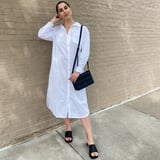


This $45 Old Navy Shirtdress Made My Street Style Dreams Come True

A personal fun fact: I'm not usually one to step out of my comfort zone when it comes to style. I'm a big fan of fitted silhouettes, so much so that you won't find much of anything oversize in my closet. I don't love this about me, though, and I've been trying to challenge myself to wear pieces I'd typically shy away from; case in point, the Old Navy Long-Sleeve Cotton-Poplin Midi Shirt Dress ($45). When I came across it in the brand's new arrivals section, I couldn't help but think about its versatility. In theory, I knew it would be perfect for breezy summer evenings and styled with a coat and boots in the fall, but I wasn't sure if the fit would be flattering. I took the risk and added my usual size medium to my virtual shopping cart. Here are my honest thoughts.

What I Like About This Shirtdress

This shirtdress made me feel confident in a way I didn't expect. I teamed it with a padded crossbody bag and platform mules, and honestly, I didn't even realize how chic it looked until my fiancé snapped some photos. I was most surprised because this dress is roomy, breezy, and comfortable - three details that I didn't think lended themselves to a street-style-worthy fit, but in this case, they definitely did. I really like how it features a hi-low curved hem, as it adds some visual interest.


What's Worth Noting

The first thing worth noting about this shirtdress is that since it's made of 100 percent cotton, it's bound to get wrinkled. For context, I ironed it before a weekend brunch, intent on having a mini photoshoot afterward. But when it was time for photos, I was bummed to see that wrinkles had already set in. Having learned my lesson, I'll probably exclusively wear it to events where I don't foresee myself sitting for long periods of time. It's annoying, but that just comes with the territory of wearing head-to-toe cotton.

Who Is This Shirtdress Best For?

This shirtdress is best for those looking to stock up on elevated basics. As mentioned earlier, there are so many ways to wear it - be it with the sleeves rolled up, completely unbuttoned over jeans, half-buttoned, you name it - and the best part of all is that it won't go out of style. Even though I was initially nervous to try the oversize silhouette, I'm glad I did because I can keep it in rotation for every season.

Additional Details

  • This shirtdress also comes in black.
  • This shirtdress comes in regular, tall, and petite sizing.
  • Regular is available in XS-4X, while tall and petite come in XS-XXL.
  • To keep them in optimal shape, machine-wash in cold water on a gentle cycle, and hang to dry.

Rating:


Going Braless? Here's What You Need To Know

Going braless can feel liberating. Whether you're working from home, running errands, or attending a formal event, nixing constricting undergarments is a fashion freedom like no other. And from a styling perspective, you get added benefits. Perhaps, for example, you've opted for a strapless top, plunging neckline, or backless design. Going braless means you can avoid straps, clasps, or underwire lining affecting the visual impact of your look. But you may have large breasts and feel more comfortable with support. Or you might be small chested and rely on bras for lift. In either scenario, ditching a bra is easier said than done. Some people, meanwhile, could simply be unsure about forgoing the undergarment altogether. So we're here to dig into the realities of wearing (or not wearing) a bra. We spoke to Eleonora Teplinsky, MD, a breast and GYN medical oncologist, who revealed whether there's a connection between bras and breast cancer or other physiological risks. Teplinsky also debunked myths surrounding going braless and sagging. She recommended, first and foremost, to talk to your doctor about any specific concerns you may have.

Stephanie Montes, fashion and beauty editor and Nue founder, also weighed in on the "free the nipple" movement, offering styling advice for those who want to try going braless but would rather not be completely bare underneath their clothing. (And she would know - Nue products regularly sell out on Revolve.)

Ahead, learn why we wear bras in the first place, read tips for constructing an outfit without one, and brush up on all things braless.


North West Is the Newest Yeezy Muse in Futuristic Silver Sunglasses

North West makes quite the convincing Yeezy model, and you only have to look at the brand's latest social media post to see why. On Sunday, July 29 a selfie of West appeared on the brand's Instagram profile, featuring her clad in a large pair of silver shield sunglasses at the brand's studio. "YZY SPLY SHDZ," the caption read, referring to an upcoming launch by YEEZY SUPPLY, Kanye West's sneaker line.

Kim Kardashian also documented the moment on her Instagram story, showing her daughter modeling the futuristic eyewear in a black sleeveless leather onesie. During her visit, West showed off her creativity when she got to making some Yeezy design sketches. She drew two alien figures on pieces of fabric, one of them rocking a pair of dark sunglasses similar in silhouette to the ones she wore and the other sporting what appeared to be a tongue accessory in the shape of a plait. Both sketches featured physical braids. Clearly, the young star takes after her parents with her budding design skills.

During Paris Fashion Week, West pulled off edgy ensembles and accessories - from oversize Balenciaga jackets to faux-nose rings - cementing her place as a rising style icon, not to mention the vintage cobalt blue Pastelle jacket she casually brought back from her father's archives or the steampunk-inspired Jean Paul Gaultier suit she wore to the brand's show. Although she had the help of stylists for these appearances, West has consistently shown a unique point of view when it comes to her fashion choices.

Does her recent visit hint at a future collaboration with Yeezy? While we wait to find out, read on to view the young star in action.


5 Sustainable Fashion Creators on How to Find the Best Thrifted Clothing

At this point, there's space on the internet for every type of fashion-lover. If you're looking to shop more sustainably and affordably, then you probably found yourself scrolling through hundreds of videos of people running around thrift stores and consignment shops around the world, finding great fashion at low prices. This special corner of social media (sometimes known as "ThriftTok") is filled with creative and sustainably minded people showing off their latest thrift-store finds.

From a fashion-inspiration perspective, it's an antidote to the fast-fashion hauls that make up millions of videos. These thrifting creators are not only championing personal style through unique finds but also offering up an alternative to fast fashion that has the potential to change the way we think of clothing and the way we shop.

While it's certainly a great option, thrifting can be intimidating. When you walk into a vast store filled with racks and shelves of clothing, it's hard to know where to start. The key is patience and a discerning eye. Most of what you'll see is not going to be right for you, and that's OK. But if you go into your shopping experience with an idea of what you need, then take the time to check the condition of the clothing, take note of the brand, and consider how often you'll rewear the garment, then you'll have a much easier time. That's exactly what these creators are trying to teach their audiences with their videos on TikTok and Instagram - and it's working.

What Is Thrifting?

Fashion thrifting can be done through online shopping or at flea markets or thrift stores. Thrifting is usually all about the hunt and, of course, the discounts. In contrast to some vintage or consignment shopping, where finders curate and sell their own finds at a markup, thrifting is all about discovery. Most thrifting creators on social media look through stores like Goodwill, Salvation Army, estate sales, or local flea markets to get their incredible pieces.

To give you some inspiration on your own thrifting journey, we found five sustainable fashion creators and asked them all about how they find the best secondhand fashion. Scroll through for their advice.


Pineapples, Fishing Nets, and More Sustainable Materials Landing in Your Closet

A couple of years ago, Mary Bemis was going through her closet, trying to offload some items on a popular resale site. As she was reading the labels, she noticed that everything she was selling was made of polyester, a common material used in apparel that usually comes from petroleum. In other words: it's a form of plastic.

"I was pretty shocked," Bemis, 31, tells POPSUGAR. "As I've been switching to a more plant-based diet and buying more clean beauty and personal-care products, it was shocking that my clothing, which also sits on my skin all day, was made with materials that are pretty toxic."

According to the CFDA Materials Index, polyester is the most widely used fiber in the world, accounting for about half of the overall fiber market and around 80 percent of synthetic fibers. In 2016, polyester fiber production was estimated at 52 million metric tons.

About 15 years ago, the fashion industry started exploring other fabric sources as a solution. Recycled plastic bottles emerged as an early alternative, as more and more brands turned to these materials to meet "sustainable" production quotas. But if the recycled plastic bottles just become more nonrecyclable products, can that really be considered sustainable?

"We all want to feel good about what we buy, and we've all been taught how important recycling is," Bemis continues. "So creating a direct linkage between materials and sustainability benefits was a very successful strategy for this material [from recycled plastic bottles] to become so popular."

Although there may not be anything inherently wrong with purchasing a product made out of recycled plastic bottles, doing so may not be as planet friendly as the average consumer is led to believe. The prevalence of microplastics, for instance, poses a growing problem for the health of oceanic sea life. Curbing this threat means manufacturing and consuming far fewer plastic products as a society, both on the individual and corporate levels.

What's more, diverting plastic bottles to be recycled for apparel and accessories presents a decidedly unsustainable conundrum, Bemis explains.

"The spike in demand for plastic bottles for fashion has actually made it much more expensive for bottling companies to source recycled plastic for their bottles," she says. "So instead of turning old bottles into new bottles over and over again, we're actually diverting the bottles into fashion products, which then can't be recycled, so it's not a great long-term solution until we find better ways to recycle clothing items."

Today, designers are shifting to incorporate new sustainable materials that go beyond the typical, whether it's sourcing wood-based fibers for athleisure or repurposing fishing nets for everyday workwear. Ahead, learn more about the new - and sometimes unexpected - materials making their way into your closet.


Everything to Know About Fast Fashion and How to Avoid It

If you shop for clothing, chances are fast fashion is a regular part of your routine. Even if you aren't buying it, you likely encounter it when you walk through the mall, scroll through your social media feeds, or search for a new outfit to shop. At this point, finding cheap, trendy, and brand-new clothing is as simple as getting a cup of coffee. Some brands have been around for decades, and recently, some newer, online-only retailers have taken over the space. What they all have in common is that they sell the top trends at the lowest prices.

While having inexpensive clothing at our fingertips might seem like a dream, fast fashion has a cost - and people and the planet are paying it. The clothing made by these companies is often created using exploited labor worldwide. It's also made in large quantities, with materials like plastic, which breaks down into our water systems. According to research from the Ellen MacArthur Foundation reported on by Earth.org, from 2000 to 2015, clothing sales doubled to around 200 billion units a year, while the average times clothing was worn decreased by 36 percent - meaning people are discarding clothing at a higher rate than ever before. The garments then end up in landfills or secondhand markets, where they impact both the health and livelihood of local communities in the global majority.

Simply put: fast fashion isn't slowing down, and that's a big problem for all of us. So, how did we get here, and what can we do to stop it? Read ahead for more.